
Every civilization wrestles with the gap between what it teaches and what it becomes. Islam, since its inception in 7th-century Arabia, emerged as one of the world’s most remarkable moral revolutions anchored in justice, compassion, and the relentless pursuit of knowledge. The Qur’an calls humanity toward salaam (peace), coexistence, and moral responsibility, making the faith as much a spiritual experience as a social ethic.Yet, as with all human endeavors, the purity of an idea often fades when confronted with power, politics, and historical contingency. The story of Islam in India reflects this universal pattern: a journey from revelation to civilization, from philosophy to practice, from spiritual idealism to historical realism. The Indian Muslim experience, therefore, is not merely a religious history it is a civilizational reflection of how ideals interact with time, culture, and circumstance.
The Philosophical Foundations: The Moral and Rational Ethos of Islam
Islamic philosophy stands upon a unique synthesis of faith and reason, revelation and reflection, spirituality and rationality. Thinkers such as Al-Farabi, Ibn Sina (Avicenna), and Imam Al-Ghazali explored the relationship between divine truth and human intellect. They saw no contradiction between knowledge of the world (ilm al-dunya) and knowledge of the soul (ilm al-deen).The Qur’an itself commands:“Read in the name of your God who created.” (Qur’an 96:1)This first revelation symbolized Islam’s lifelong commitment to learning and inquiry. For early Muslims, education was worship, reflection was prayer, and justice was the embodiment of faith.However, in the Indian subcontinent, this philosophical depth gradually receded. Centuries of political upheaval, colonial interference, and economic marginalization fractured the intellectual continuity of Muslim thought. The creative balance between iman (faith) and aql (reason) gave way to rigidity, imitation, and sectarian politics.Instead of being carriers of universal ethics, sections of the community became trapped in identity-based politics a reaction to oppression rather than a reflection of Qur’anic morality. The philosophical distance between Islam’s ideals and the lived experiences of Indian Muslims widened dramatically.
The Challenge of Practice: When Ideals Meet Reality
Islam’s ethical vision is grounded in introspection (muhasaba) and justice (adl). These concepts form the backbone of a society where individuals are accountable to God and responsible for humanity. The Prophet Muhammad (peace be upon him) exemplified this when he declared:“The best among you are those who are best in conduct.” (Sahih Bukhari) Yet, in practice, these lofty principles often struggle against the weight of historical and social realities. Within the Indian Muslim community, internal divisions sectarian, class-based, and linguistic have weakened unity and diverted attention from the Qur’anic call to reflection and renewal.The failure to invest in education, the reliance on charity without structural reform, and the lack of interfaith dialogue have further widened the gap between faith and action. Many social hierarchies within Muslim society contrary to the Prophet’s emphasis on equality still persist, eroding the moral spirit that once defined Islamic civilization.The Prophet warned of the dangers of hollow religiosity:“It may be that a fasting person gains nothing from his fast except hunger.” (Ibn Majah) This hadith remains painfully relevant. Ritual without reflection, and belief without action, transform faith into formality. The challenge before Muslims today is not the truth of Islam itself—it is the failure of its followers to live by that truth.
When Faith Met Power: Islam’s Arrival in India
India’s civilizational history is an epic of plural encounters. From Vedic sages to Buddhist monks, from Persian poets to Sufi mystics, every era added new threads to the subcontinent’s rich tapestry. When Islam entered this landscape, it did so not as a monolith but as a complex encounter of trade, philosophy, and politics.Southern Harmony: Trade and Trust
Long before any military conquest, Arab traders anchored their ships along India’s western coast in Kerala, Gujarat, and Konkan. These merchants carried not weapons but wisdom; not conquest but commerce. Through their honesty and fairness, they embodied the Qur’anic principle:“God loves those who are just in their dealings.” (Qur’an 60:8) Their interactions with local rulers, artisans, and communities gave rise to the earliest Muslim settlements in South India. Islam spread here organically, through intermarriage, trade partnerships, and the exemplary conduct of merchants. Northern Turbulence: Empire and Expansion In contrast, Islam’s arrival in northern India came amid the rise of empires. From the 11th century onwards, dynasties such as the Ghaznavids, Ghurids, Delhi Sultans, and later the Mughals entered the subcontinent with ambitions that were as political as they were religious. While some rulers patronized culture, science, and art, others waged wars in the name of expansion.The Prophet had taught:“The most perfect believer in faith is the one who is best in manners.” (Tirmidhi) Yet history often follows power, not prophecy. Islam’s image became entangled with empire. Conquest overshadowed compassion; courts replaced community. But parallel to this political Islam rose another, purer stream the Sufi tradition.
The Sufi Alternative: Hearts over Thrones
The Sufis represented Islam’s spiritual conscience. Figures like Khwaja Moinuddin Chishti, Baba Farid, and Nizamuddin Auliya offered a vision of Islam rooted in love, humility, and service. Their khanqahs became sanctuaries for the poor and meeting grounds for Hindus and Muslims alike.They lived by the verse:“Do not cause corruption on the earth after it has been set in order.” (Qur’an 7:56)Through poetry, music, and personal example, the Sufis softened hearts where the sword had hardened minds. It was through their compassion that Islam became deeply integrated into India’s social fabric. The spiritual democracy of Sufism resonated with India’s Bhakti movements, creating a shared vocabulary of love and divine unity (tawhid).Most Indian Muslims, therefore, trace their ancestry not to conquerors but to local converts people who saw in Islam’s message a moral refuge from caste hierarchy and social exclusion.
The Decline: From Ideals to Identity
After the 17th century, the moral and intellectual vitality of Indian Islam began to decline. The Mughal Empire, once a symbol of synthesis and sophistication, sank into decadence. Education stagnated, scientific inquiry waned, and reform gave way to ritualism.The Qur’an warns:“Indeed, Allah does not change the condition of a people until they change what is in themselves.” (Qur’an 13:11) The decline was not merely political it was spiritual and intellectual. As knowledge turned into dogma and introspection into identity, the community lost its creative energy. The colonial encounter deepened this crisis. British rule dismantled traditional educational systems and replaced them with administrative hierarchies that reduced Muslims to a marginalized class. Instead of re-engaging with their philosophical roots, many turned inward, clinging to nostalgia for past glory or engaging in defensive isolation. The Qur’an’s first command—“Read”—was forgotten in the noise of survival.
India’s Plural Mirror: Civilization through Coexistence
Despite its tragedies, India remains a civilizational dialogue, not a battlefield. The genius of India lies in its capacity to integrate difference without erasing it. The Islamic call to unity and the Indian belief in plurality met here in harmony rather than contradiction. Persian poetry blended with Sanskrit thought; Mughal domes rose beside temple spires. Sufi music found echoes in Bhakti bhajans. The Ganga and Yamuna symbols of two civilizations flowed side by side.This shared heritage shows that Islam did not “invade” Indian culture; it enriched it. What India absorbed was not the empire of Islam but its ethics its reverence for learning, its architectural beauty, its discipline of compassion.However, when faith became bound to identity politics, this harmony weakened. The problem was not with Islam itself, but with how Muslims, like many others, became prisoners of history instead of reformers of the present.
The Path to Renewal: Returning to the Source
The future of Indian Muslims depends on rediscovering the moral, intellectual, and spiritual core of Islam not through nostalgia, but through renewal. The Qur’an offers a timeless principle of change: “Verily, with hardship comes ease.” (Qur’an 94:6) Renewal means returning to the maqasid al-shariah the higher objectives of divine law:Protection of life,Protection of intellect ,Protection of faith, Protection of property,Protection of dignity ,These aims are not medieval constructs; they are eternal values compatible with modern democracy and pluralism. Islam’s relevance in 21st-century India lies in its ability to combine faith with freedom, piety with progress, and identity with universality.
Faith as a Bridge, Not a Barrier
Islam’s journey in India is a mirror of the human condition itself a movement from purity to power, from faith to form, from universality to particularism. But history also shows that renewal is always possible when communities return to the essence of their faith.To be a Muslim in India today is to live at a crossroads between tradition and modernity, faith and democracy, philosophy and politics. The challenge is to translate belief into behavior and values into vision.The Prophet Muhammad (peace be upon him) was described by the Qur’an as:“A mercy to all worlds.” (Qur’an 21:107) That mercy, when practiced sincerely, can again make Islam a bridge of peace in India’s plural landscape. The Indian Muslim renaissance will not come through politics alone, but through education, ethics, and empathy.If the community reclaims its intellectual heritage and moral purpose, it can once again become what Islam was meant to be a civilization of justice, compassion, and knowledge, harmonizing perfectly with India’s timeless soul.
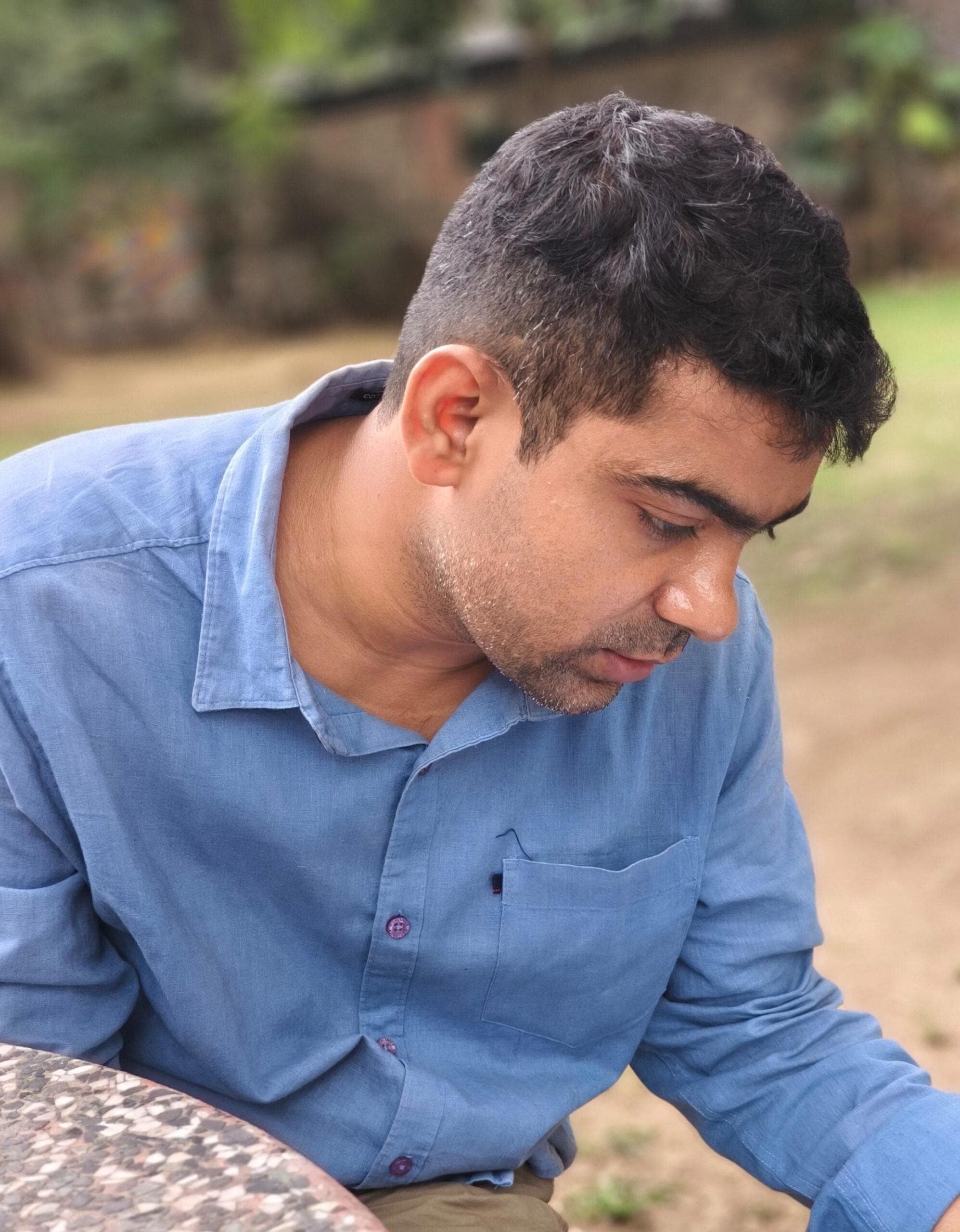
A Development Economist with postgraduate degrees in Economics and Public Administration from Jamia Millia Islamia, New Delhi. His work focuses on public finance, governance, and inclusive growth.