
The future of Indian democracy depends not merely on the equality of votes, but also on the fairness of political representation, the protection of federalism and Parliament’s ability to hold the executive accountable.
India’s democracy rests on the constitutional promise of political equality, universal adult suffrage and the principle of one person, one vote. Yet the translation of these formal democratic rights into meaningful political representation remains uneven. The underrepresentation of religious minorities, particularly Muslims, raises fundamental questions about the inclusiveness of India’s representative institutions.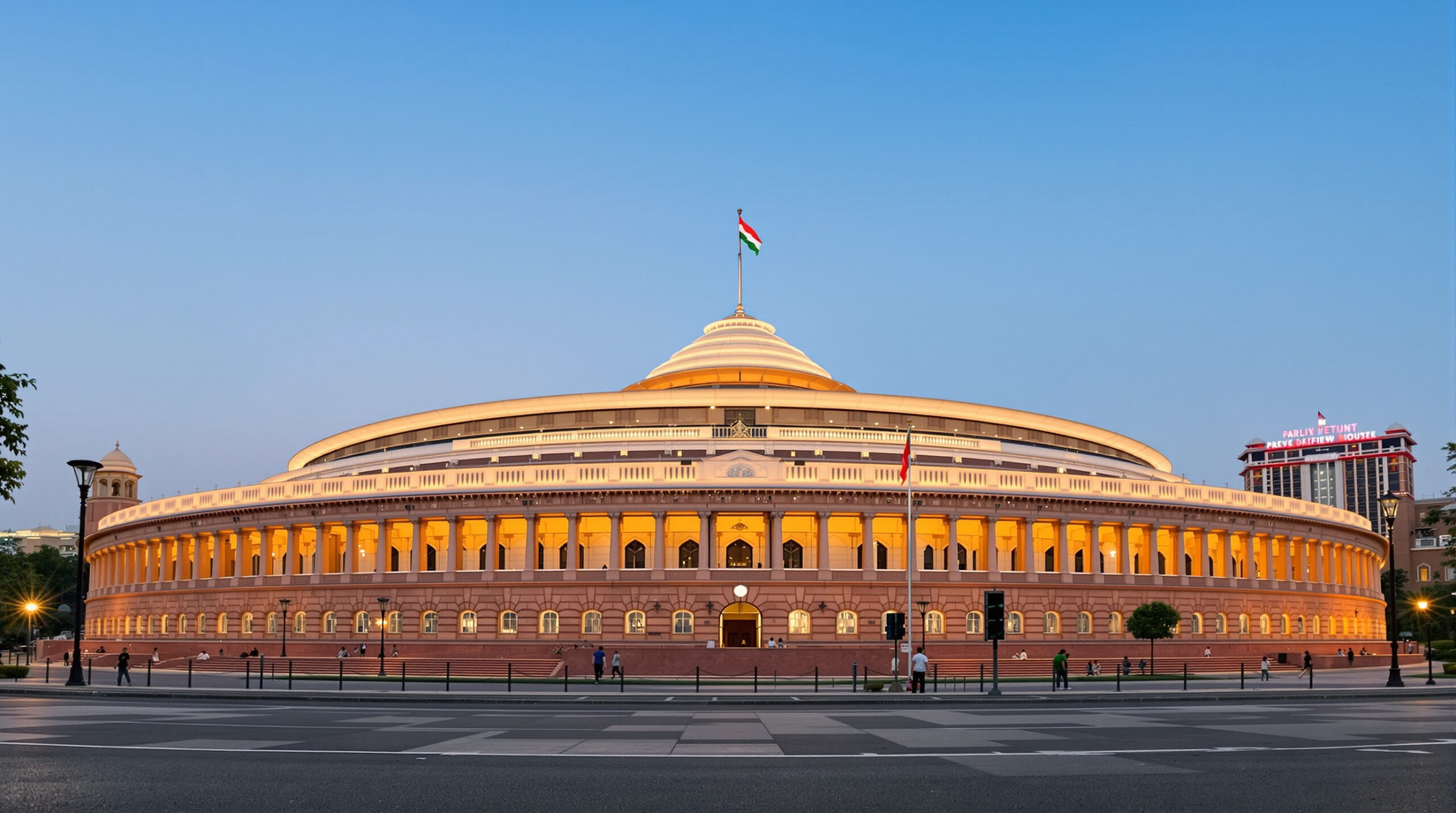
The 2024 Lok Sabha election returned only 24 Muslim MPs to a House of 543 elected members, approximately 4.4% of its strength. Muslims constituted 14.2% of India’s population according to the 2011 Census. This disparity cannot be explained by electoral behaviour alone. Candidate selection by political parties, the first-past-the-post electoral system, geographical distribution and the organisation of constituencies all influence who eventually enters Parliament.
The impending delimitation debate must therefore be understood as more than an exercise in administrative readjustment. It raises a larger constitutional question: does the architecture of India’s electoral democracy provide different sections of society with a meaningful opportunity to translate their demographic presence into political representation?
The politics of electoral geography
Delimitation is intended to ensure broadly equal representation by population through the redrawing of parliamentary and Assembly constituency boundaries. It also determines the geographical distribution of constituencies reserved for Scheduled Castes (SCs) and Scheduled Tribes (STs).
These are legitimate constitutional objectives. However, electoral boundaries are not politically inconsequential. The manner in which geographically concentrated populations are distributed across constituencies can substantially influence their electoral bargaining power.
Political science identifies two mechanisms through which constituency boundaries can weaken a group’s electoral influence: cracking and packing. Cracking involves dividing a concentrated population across multiple constituencies, reducing it to a minority in each. Packing, conversely, concentrates a group within a limited number of constituencies, potentially restricting its influence elsewhere.
These mechanisms are commonly associated with gerrymandering. Although India’s constitutional and institutional framework differs from that of the United States, the representational consequences of electoral geography deserve systematic examination. Demographic fragmentation alone does not establish deliberate manipulation, but neither should its potential consequences be dismissed.
For Muslims, this question is particularly significant. Their population is geographically dispersed, although several districts and localities have substantial Muslim concentrations. A Muslim-majority district does not necessarily translate into a Muslim-majority parliamentary constituency. The combination of Assembly segments into parliamentary constituencies can significantly alter the demographic composition of the electorate.
Nagina: The intersection of reservation and representation
The Nagina parliamentary constituency in Uttar Pradesh offers an important case study in understanding the relationship between electoral geography, reservation and minority representation.
Nagina is a Scheduled Caste-reserved parliamentary constituency. At the same time, the wider Nagina area has substantial Muslim population concentrations. According to Census 2011 figures for Nagina town, Muslims constituted approximately 70.53% of its population.
This presents an important question about the relationship between demographic presence and electoral opportunity.
Under the constitutional framework, an SC-reserved parliamentary constituency can be contested only by candidates eligible under the relevant reservation provisions. Muslim voters can participate in the election and vote for any eligible candidate, but Muslim candidates who do not meet the applicable SC eligibility criteria cannot contest that reserved seat.
The distinction is significant. A community may constitute a substantial proportion of the electorate without possessing the same opportunity to field candidates from that constituency.
Nagina therefore illustrates the intersection of two legitimate constitutional considerations: the political representation of historically disadvantaged Scheduled Castes and the electoral agency of religious minorities.
The purpose should not be to question SC reservation, which exists to address historical exclusion. Rather, the question is whether the geographical distribution of reserved constituencies can be examined more carefully to ensure that the political representation of one historically marginalised community does not unnecessarily constrain the electoral opportunities of another.
It is equally important not to treat Nagina’s demographic composition as proof of deliberate gerrymandering. Establishing that would require constituency-level demographic data, historical boundary comparisons and evidence of the decision-making process.
Delimitation and the possibility of further marginalisation
The next delimitation exercise could have consequences extending well beyond the redistribution of parliamentary seats between northern and southern states.
For Muslims, the concern is that constituencies with substantial Muslim populations could be reorganised in ways that fragment existing concentrations of voters. Even where such concentrations survive, some constituencies could be reserved for SCs or STs according to the applicable constitutional criteria.
The cumulative effect deserves closer examination. Muslim voters may retain their formal right to vote, but their ability to translate demographic presence into electoral representation could become more constrained.
This concern must also be understood in the context of India’s persistent parliamentary representation gap. When a community is already underrepresented, changes in electoral geography deserve particular scrutiny.
The debate cannot be reduced to the familiar North–South divide. Southern states have legitimate concerns about the consequences of population-based redistribution, particularly given their progress in population stabilisation. But the consequences for minorities within states must also form part of the discussion.
Federal balance and minority representation are not competing concerns. Both are integral to the functioning of a representative democracy.
The responsibility of secular political parties
There is another dimension to this debate: the responsibility of political parties that claim to uphold secularism and social justice.
Parties such as the RJD, NCP (Sharadchandra Pawar) and other opposition formations must be questioned about their commitment to meaningful Muslim political representation.
Secularism cannot remain confined to electoral alliances, public statements or opposition to majoritarian politics. It must also find expression in candidate selection, political participation and the distribution of opportunities within democratic institutions.
The underrepresentation of Muslims is not solely a consequence of electoral boundaries. Political parties themselves play a significant role. Their reluctance to nominate Muslim candidates, concerns about electoral polarisation and preference for particular electoral calculations contribute to the problem.
A political system in which minorities are repeatedly mobilised as voters but remain inadequately represented among elected decision-makers raises important questions about the substance of democratic inclusion.
The responsibility for addressing this gap cannot be placed exclusively on the Election Commission or the Delimitation Commission. Political parties must also account for their own practices.
Parliament without scrutiny
The crisis of representation, however, cannot be separated from the institutional health of Parliament itself. A representative democracy requires more than periodic elections. It requires functioning institutions through which elected representatives can question the government, scrutinise legislation and raise matters of public importance.
The recent parliamentary schedule has raised serious concerns in this regard. According to the Lok Sabha Secretariat’s bulletin dated November 26, 2026, the second part of the Eighth Session of the Eighteenth Lok Sabha will reconvene from November 30 to December 3. The Rajya Sabha is scheduled to resume on December 2. Neither House will have Question Hour, Zero Hour or Private Members’ Business during these sittings.
These are not merely procedural formalities. Question Hour is one of the principal mechanisms through which MPs seek answers from ministers about government policies, administrative decisions and public expenditure. Zero Hour provides representatives an opportunity to raise urgent public concerns. Private Members’ Business allows parliamentarians who are not ministers to introduce legislation and resolutions independently of the government.
Their exclusion narrows the established opportunities for parliamentary scrutiny and independent legislative initiative.
The timing is particularly significant. The reconvening comes amid speculation about the government’s possible legislative agenda concerning women’s reservation and delimitation. Although the precise legislative programme must be distinguished from speculation, any major constitutional changes demand the highest standards of parliamentary deliberation.
The government possesses the right to pursue its legislative agenda, but a parliamentary majority should not become a substitute for parliamentary accountability. The executive must remain answerable to the legislature, not merely use it as an instrument for securing legislative approval.
A Parliament that conducts government business without its usual mechanisms of questioning and scrutiny risks weakening the very institutional checks that distinguish representative democracy from executive-dominated government.
Democracy is not simply about holding elections and securing a parliamentary majority. It is equally about accountability, deliberation, dissent and institutional restraint. The growing tendency to privilege legislative expediency over parliamentary scrutiny raises serious questions about the health of India’s democratic institutions.
Beyond electoral arithmetic
The debate over political representation should not be reduced to the number of Muslim MPs alone. Representation has several dimensions: descriptive representation, substantive representation and political agency.
Descriptive representation concerns whether elected institutions reflect the diversity of society. Substantive representation concerns whether the interests and concerns of different communities are articulated in policymaking. Political agency concerns whether communities possess sufficient bargaining power to influence political decisions and public agendas.
A community may enjoy universal voting rights while remaining disadvantaged in these other dimensions. Similarly, a Parliament may retain its formal constitutional authority while its deliberative and accountability functions become increasingly restricted.
India must therefore approach the next delimitation exercise with greater transparency and accountability. Demographic data, proposed constituency maps and the criteria used to determine reserved constituencies should be publicly accessible. Independent academic scrutiny and meaningful public consultation should form an integral part of the process.
The objective should not be to engineer constituencies to guarantee electoral victories for particular communities. It should be to ensure that administrative and constitutional decisions do not produce systematic patterns of political exclusion.
Equally, parliamentary procedures must preserve meaningful opportunities for opposition parties and individual representatives to question the executive. Constitutional amendments and legislation with far-reaching consequences require informed debate, public scrutiny and institutional accountability.
The constitutional test
Ultimately, the test of Indian democracy cannot be limited to whether every citizen is permitted to cast a vote. It must also consider whether the institutions governing electoral competition provide different sections of society with a meaningful opportunity to participate in political power, and whether their elected representatives can exercise their constitutional responsibilities without institutional constraints.
The delimitation debate is about much more than the redistribution of parliamentary seats. It concerns the future of Indian federalism, the credibility of secular politics, the representation of marginalised communities and the constitutional promise of equal political participation.
The exclusion of parliamentary scrutiny mechanisms raises a parallel concern: whether the institutions through which citizens exercise their democratic sovereignty are retaining their capacity to hold the executive accountable.
A government is elected to govern, not to monopolise democratic institutions. Parliament belongs to the people, not to the executive.
A democracy cannot claim to represent its diversity fully if sections of its population remain politically visible as voters but persistently underrepresented as decision-makers. Nor can it remain meaningfully accountable if the institutions entrusted with questioning those in power are progressively deprived of their space. The strength of Indian democracy will ultimately be measured not by the authority of its elected governments, but by the accountability of those governments to the people and the constitutional institutions that represent them.
Mohammad Hesham Atik is an undergraduate student of Psychology at Jamia Millia Islamia, with a minor in Economics. He has also pursued certified courses in Urdu from Jawaharlal Nehru University. His interests include psychology, social issues, and cultural studies.