
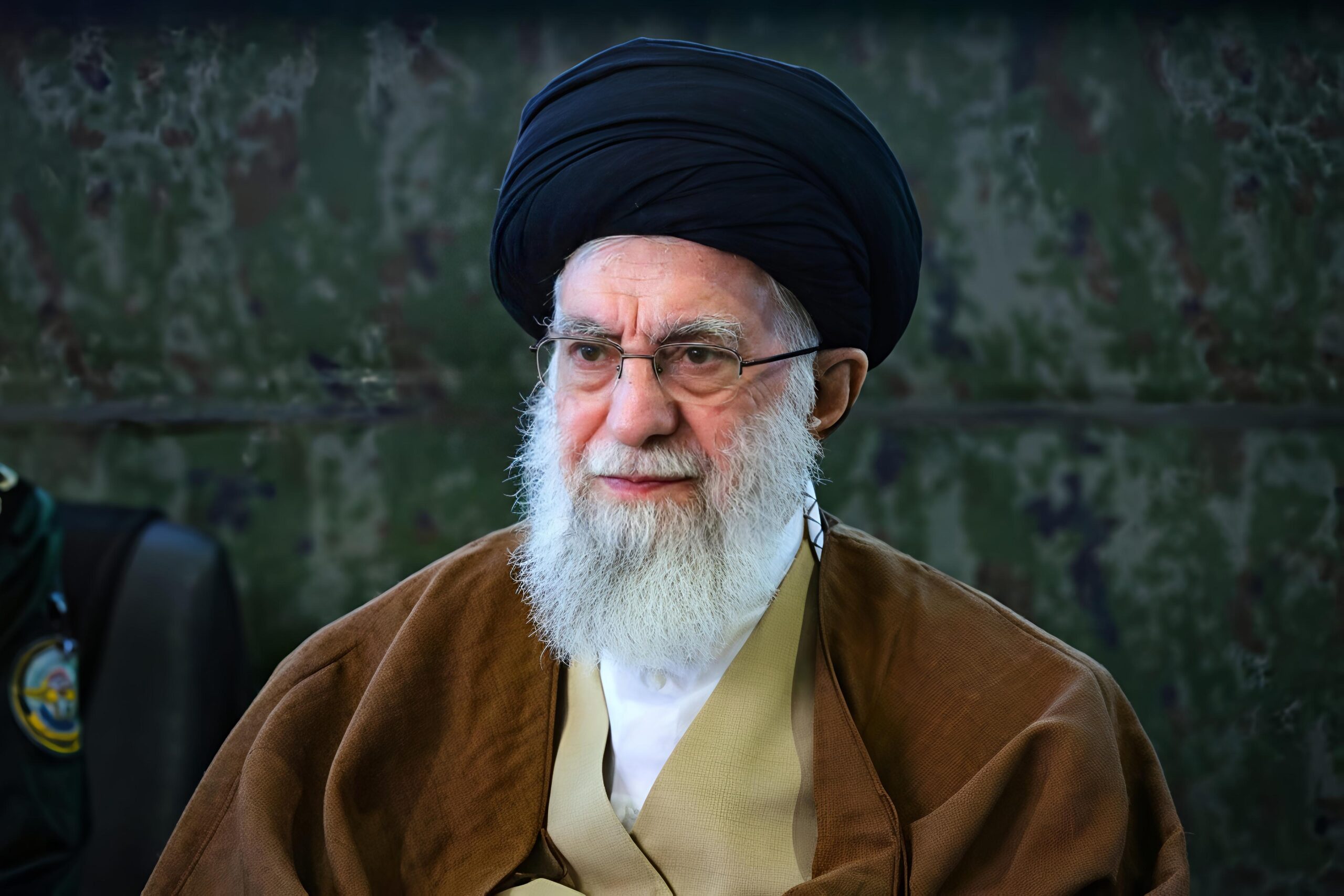
In the contemporary Muslim world, few leaders have left as profound a moral and political impact as Ayatollah Ali Khamenei. For millions of believers, he is not only the Supreme Leader of the Iran but also a spiritual guide and a source of inspiration. As a religious scholar, revolutionary figure, and statesman, he represents a leadership rooted in faith, dignity, and resistance against injustice. His life and ideas reflect the spirit of the Iranian Revolution, which sought to establish a society based on justice, independence, and Islamic values.
Central to his leadership is the concept of Wilayat-e-Faqih, the guardianship of the Islamic jurist. This idea, developed by the founder of the revolution Ayatollah Ruhollah Khomeini, emphasizes that a qualified Islamic scholar should guide the community in political and social matters during the absence of the Imam. Sayyid Ali Khamenei has carried this responsibility with steadfast commitment. Through this role, he has sought to preserve the independence of Iran and uphold the principles of justice, resistance, and moral governance.
One of the most misunderstood aspects of his leadership is his views on women. Critics have often tried to portray religious leadership in Iran as opposed to women’s dignity. However, in many of his speeches, Khamenei has emphasized the respect and care that women deserve in society. He often described women as “flowers” whose dignity and value must be protected. In his view, Islam honors women not merely through slogans but through recognition of their central role in family, society, and moral development. His speeches repeatedly highlight that the strength of a society depends greatly on the dignity, education, and moral influence of its women.
The personality of Ayatollah Khamenei is also deeply shaped by the timeless message of Imam Husayn ibn Ali, whose stand in the Battle of Karbala symbolizes resistance against tyranny. The famous principle associated with Imam Husayn ,“death with dignity is better than a life of humiliation”- remains a guiding theme in Khamenei’s speeches and political stance. He frequently reminds people that true honor lies in resisting oppression, even when the price is sacrifice. This message reflects the Qur’anic spirit expressed in the phrase “Hayhat minna al-dhilla” – humiliation is far from us.
Throughout his leadership, powerful nations and nuclear superpowers have attempted to pressure Iran politically and economically. Sanctions, threats, and diplomatic isolation were often used as tools to force submission. Yet Khamenei consistently maintained that a nation built on faith and independence cannot surrender its dignity. He stood firmly against what he describes as Western imperialism, insisting that Iran’s sovereignty and scientific progress, including its nuclear program for peaceful purposes, must remain free from external domination.
Beyond the politics of Iran, Khamenei has also positioned himself as a voice for the oppressed. He has repeatedly spoken about the suffering of the people of Palestine, particularly in Gaza Strip, calling attention to humanitarian crises and injustices faced by Palestinians. In his speeches, he emphasizes that supporting the oppressed is not merely a political choice but a moral obligation rooted in Islamic teachings. For him, standing with Gaza and the Palestinian people represents a broader commitment to justice for all oppressed communities.
For supporters around the world, Ayatollah Ali Khamenei represents a rare combination of political leadership and spiritual guidance. His words often draw from the Qur’an, the teachings of the Prophet, and the legacy of Karbala. Through these principles, he promotes dignity, resistance to injustice, and unwavering faith.
In an age where power is often measured by military strength or economic dominance, Khamenei’s leadership is presented by his supporters as a reminder that moral courage and spiritual conviction can also shape history. His message echoes a simple yet powerful principle: a nation that refuses humiliation and stands for justice can inspire millions across the world.

Sayed Mobashar Ali has done his graduation (B.A. Honours Psychology ) from Jamia Millia Islamia . He has an interest in media, democracy, and society.