
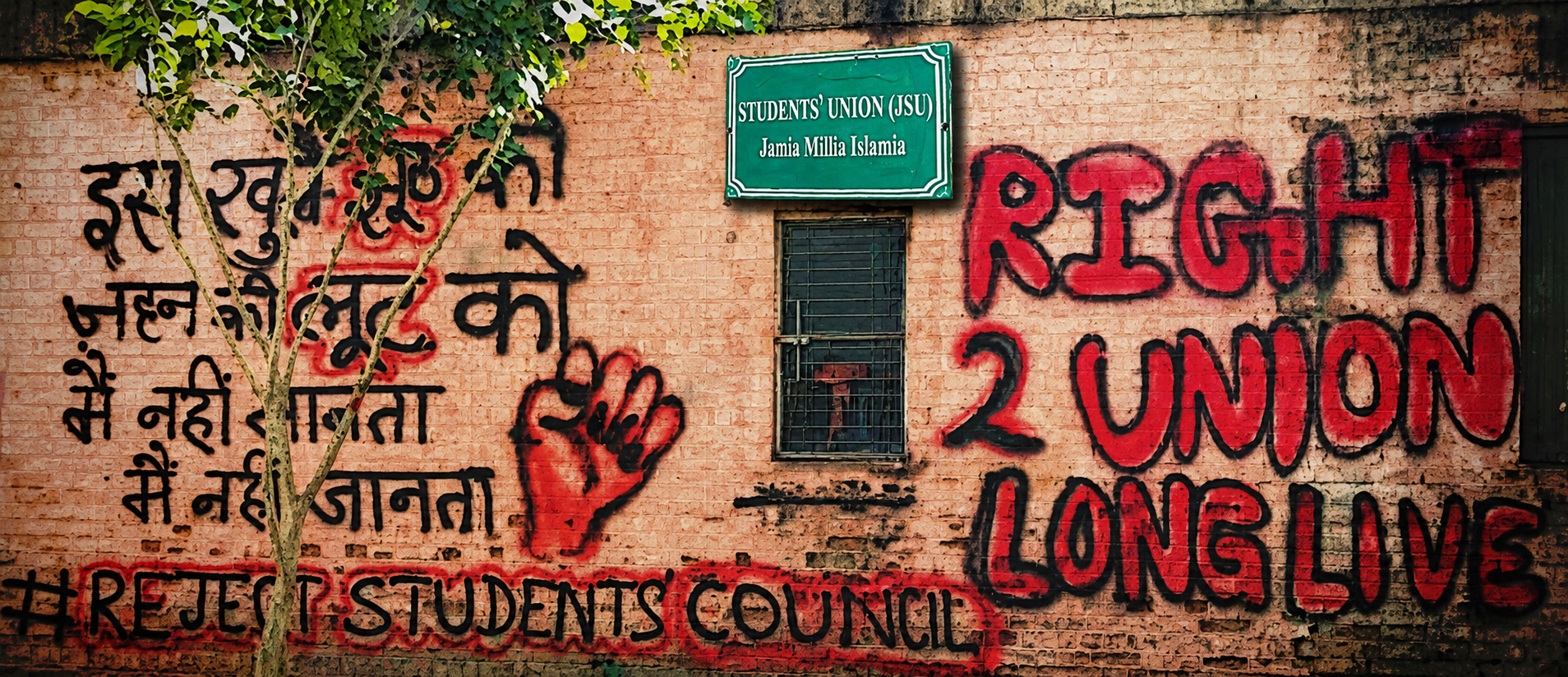
A university is not merely an institution that awards degrees, it is also a place where young people learn the values of democracy, dialogue, responsibility and dissent. At Jamia Millia Islamia, a great university with a distinguished history rooted in India’s national movement and the ideals of Mahatma Gandhi, the longstanding demand for the restoration of the Students’ Union deserves serious consideration, not merely as an administrative matter, but as a question of student representation and democratic participation.
Since the discontinuation of union elections in 2006, students have lacked a university-wide elected body through which they can collectively raise their concerns. The recent hunger strike and peaceful protests demanding restoration have once again brought this issue to the forefront. Their demand deserves to be heard, examined and addressed through meaningful dialogue.
The administration has a legitimate responsibility to maintain discipline, ensure campus safety and protect the academic environment. However, these responsibilities need not stand in opposition to an elected students’ union. With transparent elections, a clear code of conduct and accountable leadership, representation and discipline can coexist. The concerns of the administration deserve consideration, but so does the students’ demand for a recognised voice in matters affecting their university life.
The democratic values enshrined in the Constitution protect freedom of expression and association, subject to applicable constitutional and legal restrictions. These principles do not automatically guarantee a particular union structure, but they provide an important foundation for meaningful student participation. The Supreme Court’s judgment in University of Kerala v. Council, Principals’ Colleges, Kerala (2006) also offers a framework for conducting student elections with appropriate safeguards.
Jawaharlal Nehru, addressing the Lucknow University Union in 1961, spoke of the importance of unity and cooperation between students and university authorities. This remains a relevant lesson: student representation should strengthen communication between an institution and its students, not create an unnecessary divide between them.
The hunger strike at Jamia must also be understood in this context. When students resort to a peaceful but serious form of protest to demand representation, their action deserves a considered response. A hunger strike should not be treated simply as an interruption to normal campus life; it should prompt the administration to engage with the concerns that have led students to take such a step. Their health and well-being must remain a priority, alongside an honest effort to resolve the underlying issue.
Restoring the union would not mean granting students unlimited authority or exempting elected representatives from accountability. It would mean creating a recognised platform where grievances concerning hostels, libraries, academic facilities, accessibility and student welfare can be raised collectively. Such a body must also ensure fair participation for women and students from diverse backgrounds.
Jamia has a distinguished history connected with the national movement and the idea that education should develop informed, responsible citizens. Giving students a meaningful voice would be consistent with that educational purpose. The university need not simply replicate the model of another institution; it can establish a system suited to its own needs and circumstances.
The administration should now take a constructive step towards restoring the Students’ Union. It should engage with student representatives, establish a transparent timetable for consultation and work towards a fair, inclusive and accountable electoral framework. The peaceful protests and hunger strike should serve as an occasion to address the demand seriously rather than allow the issue to remain unresolved.
A university becomes stronger when disagreement can be expressed peacefully and answered through dialogue. Students are not merely recipients of education; they are members of the academic community whose concerns deserve institutional attention.
The restoration of JMISU should therefore be approached not as a victory for one side over another, but as an opportunity to strengthen trust between students and the administration. Jamia’s students deserve a representative platform, and their demand for a democratic voice deserves a serious response. Listening to them would not weaken the institution; it would demonstrate its confidence in dialogue, responsibility and democratic values.

Sayed Mobashar Ali has done his graduation (B.A. Honours Psychology ) from Jamia Millia Islamia . He has an interest in media, democracy, and society.