
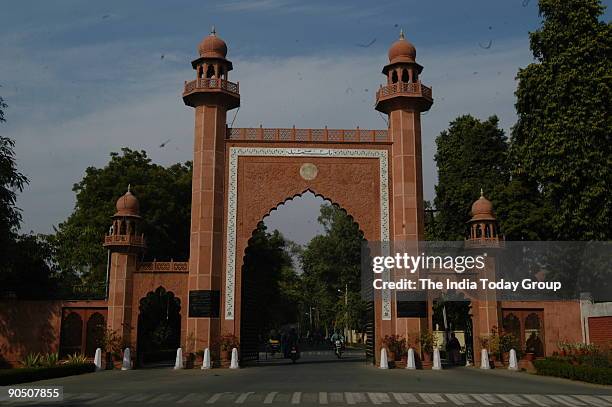
Students of colleges and universities are entitled to elect representatives from among themselves. At Aligarh Muslim University, however, that democratic right has remained unexercised for years and the last Students Union election was held in 2018–19. The demand for the restoration of the AMU Students’ Union is therefore not merely a demand for an institution from the past. It is a demand for representation, accountability and a democratic voice for the students of one of India’s most historically significant universities.
In August 2025, following student protests, the university administration agreed to hold Students’ Union elections in December 2025 and appointed a Chief Election Officer. The elections, however, were never held. Now again On 21 September 2026, postgraduate student Yasir Fahad began an indefinite hunger strike, demanding the restoration of the Students’ Union, the appointment of an election authority and the announcement of a definite election date. The hunger strike became the heart of the wider student movement, with students from different departments subsequently joining the protest.
The question is straightforward:if students are expected to obey the rules of an institution, should they not also have a legitimate and elected mechanism through which they can raise their concerns?
An elected Students’ Union is not simply a platform for student politics. It provides students with representation on issues that directly affect their lives: hostels, accommodation, scholarships, fees, examinations, food, academic pressure and disciplinary proceedings. It also provides an institutional channel through which students can question decisions and seek accountability.
This becomes particularly important when disciplinary powers are exercised. Students said intimidation, suspensions and coercive action during the ongoing movement, while reports have described confrontations between protesters and the proctorial team. Such allegations deserve independent examination. Where disciplinary action is taken, it should be governed by due process, and peaceful protest should not itself become a reason to deny students their representative voice.
The issue also has a legal and institutional dimension. The Supreme Court’s 2006 directions made the Lyngdoh Committee recommendations applicable to student elections. The recommendations state that universities should ordinarily conduct elections for student representative bodies. They provide mechanisms for dealing with adverse campus conditions and election-related disputes rather than making the absence of elections a permanent arrangement.
There is also a question of financial accountability. Students have raised concerns about Union-related fees collected and spent funds in the name of student union maintenance over the years despite the prolonged absence of an elected Students’ Union. These concerns deserve transparency and an independent audit. Students should be able to know how money collected in their name has been administered.
But the importance of the Students’ Union at AMU cannot be understood only through rules, elections and administration. It must also be understood through the history of the institution itself.
Sir Syed Ahmad Khan founded the Mohammadan Anglo-Oriental College at Aligarh in 1875 with a larger social vision: to promote modern education and create a generation capable of contributing to the advancement of the community. The institution became Aligarh Muslim University in 1920.
For generations, Aligarh has been more than a university. It has been a place where students encountered ideas, debated politics, developed intellectual confidence and learned to organise. Its alumni went on to occupy very different positions in public life. Zakir Husain eventually became President of India. Hasrat Mohani, an alumnus of the college, became one of the important figures associated with the Communist Party of India. The intellectual environment of Aligarh in the 1930s also contributed to the Progressive Writers’ Movement and the emergence of political and literary figures such as Ali Sardar Jafri.
These figures did not all share the same political ideology. That is precisely the point.
Aligarh’s historical contribution was not that it produced one particular kind of leader. It created an environment in which students could develop the confidence to think, argue, organise and participate in public life. Nationalists, communists, poets, educators and political activists emerged from an intellectual culture that encouraged engagement with the questions of their time.
That tradition of producing leaders is one of the reasons the Students’ Union matters.
For the Muslim community in particular, AMU has historically occupied a unique place. It has provided generations of students with access to higher education and has helped produce professionals, academics, public servants, writers, political workers and community leaders. Many of those who passed through Aligarh carried their education and experiences back into wider society.
The Students’ Union formed part of that educational experience.
Democracy is not learnt only from textbooks. It is also learnt by participating in elections, listening to opponents, negotiating disagreements, representing others and being held accountable for decisions. A university can teach students about democratic institutions in the classroom, but a representative Students’ Union allows them to experience those principles directly.
That is why the present situation should concern not only current students but the wider AMU alumni community and the Muslim community that has historically placed enormous value on the institution.
On 17 October, Sir Syed Day will once again be celebrated by AMU Students and its alumni around the world. It will be a day to remember his contribution to education and institution-building. But remembering Sir Syed should also invite a harder question: what does it mean to preserve the legacy of an institution built to educate, empower and develop future generations?
If the students of that institution are asking for nothing more than an elected body through which they can represent themselves, then their demand deserves serious engagement.
The restoration of the AMU Students’ Union should therefore be understood not merely as the revival of an old campus institution. It is about preserving a tradition of democratic participation that has been part of the intellectual and political life associated with Aligarh.
The way forward should be clear:
The administration should engage with the protesting students, ensure due process in disciplinary matters, protect peaceful protest, address legitimate questions concerning Union-related finances, appoint an election authority and announce a credible timetable for free and fair elections.
Sir Syed built Aligarh with the belief that education could transform individuals and, through them, society. A university that nurtures future leaders must also give its students the opportunity to learn leadership through representation.
Restoring the Students’ Union would therefore not be a departure from Aligarh’s legacy. It would be one way of preserving it.
Mohammad Hesham Atik is an undergraduate student of Psychology at Jamia Millia Islamia, with a minor in Economics. He has also pursued certified courses in Urdu from Jawaharlal Nehru University. His interests include psychology, social issues, and cultural studies.