
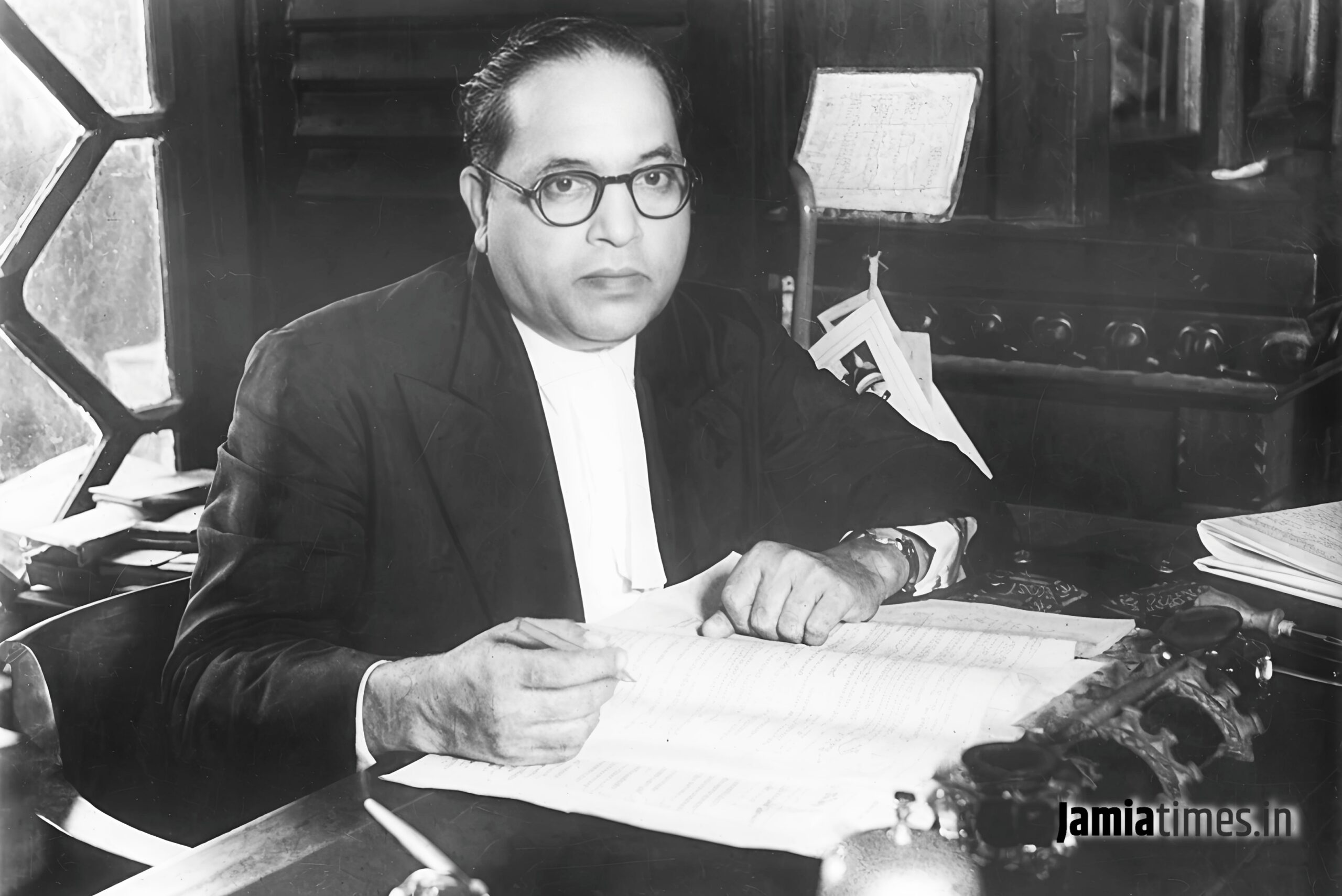
India remembers Dr. B.R. Ambedkar as the maker of the Constitution. But his greatest struggle was not only about law or politics. His real fight was against caste ,a system that divided people from birth and treated millions as less than human. Ambedkar did not see caste as a harmless tradition. He saw it as a cruel social order that destroyed dignity, equality, and freedom.
Ambedkar believed that caste was the biggest obstacle in India’s progress. In his famous book Annihilation of Caste, he warned that caste comes in the way of every reform. He wrote that “caste is like a monster which blocks the road in every direction”. According to him, India cannot achieve real political or economic change unless caste is destroyed. His message was clear ,India cannot become a true democracy if society remains unequal.
What made Ambedkar different was his honesty. He did not believe caste could be removed by only giving speeches or preaching morality. He explained that caste lives inside the minds of people. In Annihilation of Caste, he said “caste is not a wall of bricks that can be broken easily, it is an idea, a belief, and a habit”. This is why caste continues even when laws change. Ambedkar understood that to end caste, India must change not only rules, but also social thinking.
Ambedkar’s biggest achievement was turning equality into a constitutional promise. He used the Constitution to strike directly at the heart of caste discrimination. Untouchability was abolished( Article 17) , and equality before law was made the foundation of Indian democracy. This was a revolutionary step. For the first time, the Indian State openly declared that treating anyone as “untouchable” is a crime and against the spirit of the nation.
Ambedkar also knew that ending untouchability alone would not destroy caste. Untouchability is only one result of caste, not the whole system. Caste survives through daily social practices -who people eat with, who they marry, who they allow into their homes, and who they treat as “pure” or “impure.” That is why Ambedkar strongly supported inter-caste marriage. He believed that caste survives mainly through strict marriage rules. If people marry across caste, caste boundaries start breaking. In simple words, Ambedkar believed that real equality begins when people stop treating marriage as a caste agreement. But today, even after so many decades, caste continues to show its power. Many incidents across India prove that discrimination has not ended , it has only changed its form. Even today, Dalit grooms are sometimes not allowed to ride a horse during their marriage procession. Something as normal as riding a horse becomes a matter of “status” in caste society. When Dalits assert dignity, some dominant caste groups treat it as an insult and react with anger or even violence. These incidents show that caste is not just about poverty or illiteracy; it is about social control and humiliation.
In some places, the situation becomes worse. Villages may practice social separation openly. People may still be stopped from using common water sources, entering certainstreets, sitting with others, or participating equally in social life. This proves Ambedkar’s warning, caste is a state of mind. And a mindset does not disappear easily.
There are also areas where discrimination is not only based on caste, but on ideas of purity and ancestry. Some communities believe they come from “higher” ancestors and therefore treat outsiders as inferior. In such places, outsiders may be discouraged from touching local people or things, as if outsiders are impure. This mentality reflects the same idea that caste is built upon , the false belief that some human beings are naturally superior.
At the same time, India has tribal communities whose rights and culture are protected under the Constitution( schedule 6). Tribal safeguards exist because these groups faced exploitation and needed protection of land, identity, and self-rule. But the discrimination we see in many non-tribal regions is different. It is not about protecting culture. It is about maintaining social dominance. Often, caste discrimination continues in these places through myths of “purity,” “Aryan ancestors,” or false pride in being superior.
Ambedkar’s struggle achieved great success. He broke the silence around untouchability.
He gave the oppressed a voice and a constitution. He proved that equality is not charity ,it is a right. He created a legal framework that allowed Dalits to fight, question, and demand justice. Yet the reality is painful. India has changed in law, but society has not changed fully. Caste may not always appear openly, but it continues through marriage restrictions, everyday discrimination, humiliation, and violence. This shows that Ambedkar’s mission is not finished. Ambedkar wanted not only political democracy, but social democracy ,a society where every citizen is respected equally. His fight was for dignity. His dream was an India where nobody is treated as untouchable, inferior, or unworthy. Until every person can live freely without fear of caste, Ambedkar’s message remains alive and India’s responsibility remains unfinished.

Sayed Mobashar Ali is a B.A. Honours Psychology student at Jamia Millia Islamia with an interest in media, democracy, and society.