
Sir Syed Ahmed Khan Biography
Sir Syed Ahmed Khan was born on 17 October 1817 in Delhi during the Mughal Empire and belonged to a family closely associated with the Mughal court, his maternal grandfather, Khwaja Fariduddin was a Wazir in Akbar Shah II’s court and while his paternal grandfather had an administrative position under Emperor Alamgir II. Sir Syed Ahmed Khan’s father, Syed Muhammad Muttaqi was a confidant of Akbar Shah II. Raised in the cultural richness of Mughal Delhi, Sir Syed received both traditional and rational education. He studied the Quran, Persian and Arabic along with mathematics, astronomy and medicine while developing a strong interest in literature, poetry and philosophy.Sir Syed Ahmad Khan (1817–1898) remains one of the most transformative reformers in the history of modern India. At a time when Indian Mr. Sir Syed Ahmed Khan faced political marginalization, cultural insecurity, and educational backwardness after the Revolt of 1857, Sir Syed envisioned a movement that would rescue the community through education, rationalism, and social reform. His project known as the Aligarh Movement was not merely an attempt to open schools or colleges; it was an intellectual revolution that sought to reconcile Islam with modernity, faith with reason, and tradition with progress.The founding of the Muhammadan Anglo-Oriental College (MAO College) in 1875, which later became Aligarh Muslim University (AMU), symbolized this spirit of reform. It aimed to cultivate a new generation of Muslims who would engage confidently with the modern world, contribute to governance, and preserve the moral integrity of their community. Sir Syed’s dream was to see the Muslim mind liberated from superstition, inertia, and prejudice, through the transformative power of knowledge.However, in the twenty-first century, a deep paradox haunts this legacy. While Sir Syed’s portrait adorns every hall and his words are quoted in every speech, his philosophy is rarely practiced or even properly understood.
The Philosophical Foundation of Sir Syed’s Vision
To understand Aligarh’s original spirit, one must revisit the intellectual foundations of Sir Syed’s philosophy. He lived in a period of immense political despair. The fall of the Mughal Empire had shattered Muslim confidence; the 1857 Revolt and its aftermath further alienated the community from the new British power structure. Yet, instead of succumbing to bitterness or nostalgia, Sir Syed embarked on a project of reconstruction. He believed that the root cause of Muslim decline was ignorance both of modern sciences and of Islam’s own rational foundations. His central conviction was that education was the true instrument of empowerment. In his words, “Without knowledge, there is no progress; without progress, there is no respect; and without respect, there is no existence.”
Sir Syed’s approach can be termed Islamic modernism an intellectual effort to harmonize revelation with reason. He argued that the Qur’an encouraged scientific inquiry and rational reflection. His commentary on the Qur’an and his essays in Tahzibul-Akhlaq emphasized that true Islam was not opposed to science, democracy, or reform. He frequently cited Islamic history particularly the Golden Age of Muslim science to show that rational inquiry was a religious duty, not a threat. Unlike many reformers of his time, Sir Syed did not seek to westernize blindly; rather, he sought to re-educate Muslims in the art of thinking. His modernist school was not secular in the European sense but deeply rooted in Islamic rationalism.
He famously said:
“Religion is like the heart, and reason is like the head; when both work together, the human body survives.”
The Aligarh Movement and Its Transformative Impact
The Aligarh Movement emerged as the most influential Muslim intellectual renaissance in 19th-century India. Through the establishment of schools, journals, and educational societies, Sir Syed inspired a whole generation of Muslims to pursue modern education and engage with public life.The Muhammadan Anglo-Oriental College, founded in 1875, was modeled on Cambridge University but infused with Islamic ethics. Its curriculum blended Western sciences with moral instruction, aiming to produce men of intellect and character. Sir Syed’s close associates like Syed Mahmud, Altaf Husain Hali, and Nawab Mohsin-ul-Mulk expanded the institution’s influence across India. The college not only provided education but also created a new Muslim identity grounded in confidence and modernity. His journal Tahzibul-Akhlaq (The Refinement of Morals) played a major role in challenging superstition, social rigidity, and intellectual stagnation. He advocated women’s education, interfaith understanding, and social responsibility remarkable ideas for his time.Politically, Sir Syed adopted a pragmatic loyalism towards British rule, arguing that Muslims should cooperate with the colonial administration to regain lost opportunities. However, this loyalism was not subservience; it was strategic realism. He realized that only through education and engagement could Muslims achieve equality and representation. His famous 1896 memorandum on Muslim representation later influenced the formation of the All India Muslim League, marking the first step towards organized Muslim political identity.
The Post-Sir Syed Era: AMU as a Symbol of Muslim Modernity
After Sir Syed’s death in 1898, his followers institutionalized his vision through the Aligarh Muslim University Act (1920), transforming MAO College into a full fledged university. In the first half of the twentieth century, AMU became the intellectual capital of Muslim India. Its alumni contributed to the freedom movement, academia, journalism, and statecraft. The university balanced religious ethos with secular scholarship. It nurtured scientists, poets, and politicians alike. The Aligarh model inspired Muslim educational institutions across South Asia, including Osmania University (Hyderabad) and Islamia College (Lahore).However, after Partition in 1947, AMU faced a crisis of identity. Many of its leading intellectuals migrated to Pakistan. In India, the university struggled to redefine itself as a national rather than a communal institution. Yet, despite challenges, AMU continued to symbolize Muslim progressiveness and inclusion through much of the twentieth century.
Contemporary Decline: The Crisis of Vision and Values
The decline of Aligarh Muslim University (AMU) cannot be understood as a mere administrative lapse or academic slowdown. It represents a crisis of vision a gradual erosion of the intellectual and moral foundations upon which Sir Syed Ahmad Khan built his movement. AMU, once known as a the “Oxford of the East,” is today caught between the pressures of modern competition and the weight of its historical legacy. The university continues to command emotional reverence, but the Aligarh ethos characterized by rationality, refinement (tahzib), and moral leadership has been replaced by ritualism, politics, and inertia.
Institutional Decay and Bureaucratic Control
The administrative structure of AMU has become heavily bureaucratized, reducing academic autonomy. Decision making is slow, often influenced by political alignments rather than academic merit. Instead of innovation, a culture of status quoism prevails. Frequent confrontations between administration and student bodies have eroded the atmosphere of trust and learning that once defined the campus. The bureaucratic nature of university governance has led to delays in research grants, recruitment, and infrastructural expansion, making AMU less competitive with newer central universities and IITs.
Declining Academic Standards
AMU once produced intellectual giants scientists, historians, poets, and administrators who shaped national and international thought. Today, the decline in research quality, outdated curricula, and lack of interdisciplinary engagement are evident. Many departments function without dynamic leadership or innovative pedagogy. The emphasis has shifted from intellectual rigor to degree accumulation.Furthermore, the research ecosystem has weakened. Publications are limited, and collaboration with international institutions remains minimal. Despite having a vast alumni network, the university has not effectively mobilized it for research partnerships or development programs.
Cultural and Moral Degradation
The Aligarh of Sir Syed’s time was not just an educational space but a cultural revolution. The spirit of Tahzibul-Akhlaq refinement of manners, intellectual discipline, and respect for knowledge defined the campus. Today, that refinement is fading. Student behavior, campus cleanliness, and academic discipline reflect a worrying departure from those values.
The moral purpose of education, which Sir Syed saw as inseparable from intellectual pursuit, has been replaced by material ambition and political opportunism. Many students join campus politics not to serve, but to seek influence. The idea of education as service so central to Sir Syed’s dream—has been overshadowed by self-interest.
Factionalism, Lobbying, and Regionalism
Perhaps the most visible form of decline is campus factionalism. Students and faculty often align themselves with groups based on regional or linguistic identity Bihar, UP, Kerala, West Bengal, Jammu & Kashmir, etc. These informal networks dominate hostel politics, elections, and even academic recommendations.This regionalization has destroyed the pan-Indian spirit of Aligarh, which once united Muslims across provinces and sects. In Sir Syed’s time, the Aligarh Movement transcended regional and ethnic boundaries it was a universal Muslim awakening. Today, that inclusive fraternity has fragmented into competing loyalties.
Ritualization of Sir Syed’s Legacy
Another symptom of the decline is the ritualization of Sir Syed’s memory. His portrait is garlanded every October; speeches are made, slogans shouted, and banners displayed. Yet, his writings are neither studied nor internalized. The philosophy behind his reform the courage to question dogma, the passion for science, the belief in rational faith is lost in ceremonial repetition.AMU today remembers Sir Syed as an icon, not as an idea. His spirit of dissent, inquiry, and intellectual honesty the very qualities that defined his greatness are absent in the institution that bears his name.
Empirical Observations and Field Reflections
During field visits, informal interviews, and classroom interactions, several patterns emerge that validate the argument that AMU is experiencing a crisis of purpose rather than merely a structural breakdown. These empirical insights reflect how the philosophy of Sir Syed has become distant from everyday campus life.
The Gap Between Symbolism and Substance
Every student can recite Sir Syed’s famous lines “Khuda ne ek qaum ko tabah nahi kiya, jab tak usne khud apne aap ko tabah na kiya ho” (God does not destroy a people until they destroy themselves). But when asked about his Tahzibul-Akhlaq essays or his commentary on the Qur’an, few have read them.This demonstrates that Sir Syed has become a symbol, not a source of learning. His legacy exists in institutional architecture, but not in intellectual architecture. Many students and even faculty members cite him emotionally, but rarely engage with his rationalist or reformist thought.
Student Politics Without Philosophy
Student politics at AMU historically played a positive role—producing leaders who combined intellect with public service. But over the years, it has deteriorated into factional power struggles. Political mobilization is often driven by hostel-based alliances, regional solidarity, and external political influence.Debating societies that once fostered reasoning and dialogue have been replaced by confrontational rhetoric. Elections have become festivals of identity rather than contests of ideas. The result is a generation of students more trained in mobilization than in reflection.
Decline in Reading and Research Habits
One of the most alarming trends observed is the collapse of reading culture. Library attendance is thin, and discussion circles—once the soul of Aligarh’s intellectual life are now rare. Students increasingly rely on social media summaries or online notes.The faculty-student interaction, which Sir Syed saw as mentorship, has reduced to transactional exchanges. The vibrant culture of inquiry, debate, and reformist thinking that once defined AMU’s ethos is slowly disappearing.
The Loss of Urdu’s Intellectual Function
Urdu, the language that once served as the medium of Aligarh’s intellectual production, has been marginalized. It is now confined to ceremonial poetry sessions rather than serious research or philosophical debate. The younger generation often lacks proficiency in Urdu, while English education remains uneven. This linguistic alienation has led to a disconnection from the intellectual world that produced Sir Syed, Hali, and Shibli.
Thus, the bridge between tradition and modernity, which language once offered, is breaking down.
Faculty Morale and Institutional Leadership
Many faculty members express frustration over administrative stagnation, limited funding, and lack of academic freedom. Leadership often rotates among the same small circle, creating intellectual monotony. There is insufficient encouragement for innovation, global collaboration, or curricular reform.The absence of visionary leadership means that Sir Syed’s principle education as social transformation has been replaced by an attitude of bureaucratic survival. In this atmosphere, mediocrity flourishes while excellence often feels unwelcome.
The Philosophical Disconnect: Misreading Sir Syed
Sir Syed Ahmad Khan’s philosophy was both progressive and rooted a delicate balance between faith and reason. He argued that Islam was not static but evolutionary, capable of adapting to changing times. Yet, in contemporary discourse, his ideas are either oversimplified or misappropriated.
Reduction of Sir Syed to Political Identity
Many treat Sir Syed merely as a Muslim political activist who sought separate representation. This is a partial reading. His political loyalism towards the British was not subservience but strategy. He understood that education and administrative participation were the real sources of power.
Today, however, this nuanced philosophy is forgotten. Students remember his call for “Muslim unity” but not his insistence that unity must rest on knowledge, morality, and science. As a result, AMU’s identity has become defensive rather than dynamic.
Misunderstanding Rationalism
Sir Syed’s rationalism was not secularism in the Western sense; it was Islamic rationalism a belief that reason and revelation are complementary. He reinterpreted religious texts in the light of scientific understanding, encouraging Muslims to think critically.Today’s AMU, ironically, discourages such questioning. Religious and secular disciplines often exist in silos, without meaningful dialogue. Courses in theology, social science, and science rarely interact. The university that once symbolized integration of faith and reason has itself become compartmentalized.
The Lost Spirit of Self-Criticism
One of Sir Syed’s most radical contributions was his courage to criticize his own community. He openly spoke against superstition, sectarianism, and blind imitation. He believed that reform begins with introspection. But today, self-criticism is seen as betrayal.This intellectual insecurity prevents Aligarh from engaging in honest reflection. The fear of offending sentiment has replaced the courage of speaking truth. Sir Syed would have called this moral cowardice, not respect.
The Confusion Between Modernization and Westernization
Sir Syed’s goal was not to Westernize Muslims but to make them modern while preserving moral integrity. He admired Western science and governance but remained deeply rooted in Islamic ethics. Unfortunately, this balance is lost.A segment of the student body associates modernity with external symbols fashion, lifestyle, social media visibility while neglecting intellectual modernization. Another segment retreats into conservatism, rejecting modern science and critical thought. Both misunderstand Sir Syed, who believed that true modernity is moral, not material.
Restoring the Aligarh Spirit: Pathways to Revival
Reviving Aligarh’s lost spirit requires both institutional reform and philosophical renewal. The university must rediscover Sir Syed not merely as a historical figure, but as a living intellectual guide for the 21st century.
Reintegrating Sir Syed’s Thought into Curriculum: AMU should introduce interdisciplinary courses on Sir Syed’s philosophy, Islamic rationalism, and modernist reform. His writings in Urdu and English should be part of general education courses across departments. A dedicated “Sir Syed Centre for Rational Studies” could promote critical engagement with his works, comparative theology, and science-religion dialogue.Reviving Academic Culture:The university must reclaim its legacy as a space of debate, research, and discovery. Literary and debating societies, academic clubs, and intellectual circles should be reactivated. Workshops on critical thinking, ethics, and social reform could help students internalize Aligarh’s intellectual tradition.Reforming Student Politics:Student unions should be reoriented toward academic and social welfare goals. Elections can be made issue-based rather than identity-based, emphasizing debates on campus policy, education reform, and civic engagement. Training programs on leadership ethics, community service, and public speaking could transform student politics from confrontation to contribution.Promoting Faculty Excellence and Research Innovation:The administration should prioritize merit-based appointments, international collaborations, and research funding. Faculty members must be encouraged to publish, participate in global conferences, and mentor students in innovation. Establishing joint research programs with foreign universities would restore AMU’s global academic footprint.Ethical Reawakening and Campus Culture:Revival of Tahzibul-Akhlaq values discipline, humility, civility, and service must be central to student life. Ethical workshops, community volunteering, and mentoring systems can reintroduce character-building into the educational process. Campus cleanliness, punctuality, and mutual respect must be redefined as expressions of Aligarh culture.Strengthening Urdu and English as Dual Intellect Mediums:AMU should treat Urdu as an intellectual heritage and English as a tool of global engagement. Language training programs can bridge the gap between cultural identity and modern communication. Revitalizing Urdu journals, translation projects, and digital archives will reconnect students with their intellectual history.Reviving the Spirit of Inquiry: Above all, AMU must encourage questioning and critical thought the essence of Sir Syed’s philosophy. The classroom must become a forum for dialogue, not dogma. Students should be taught that disagreement is not disobedience but the foundation of knowledge.
As Sir Syed wrote, “Do not follow me blindly. If my words go against reason and evidence, reject them.” This is the true Aligarh spirit humility before truth.
If Sir Syed were to visit Aligarh today, he might be disheartened by the noise but encouraged by the potential. The buildings stand, the name survives, but the mission awaits revival. The challenge is not external neither government nor society but internal, within the mindset of the institution.
Only then will the words “Sir Syed’s Aligarh” regain their meaning not as nostalgia, but as a living revolution of the mind.
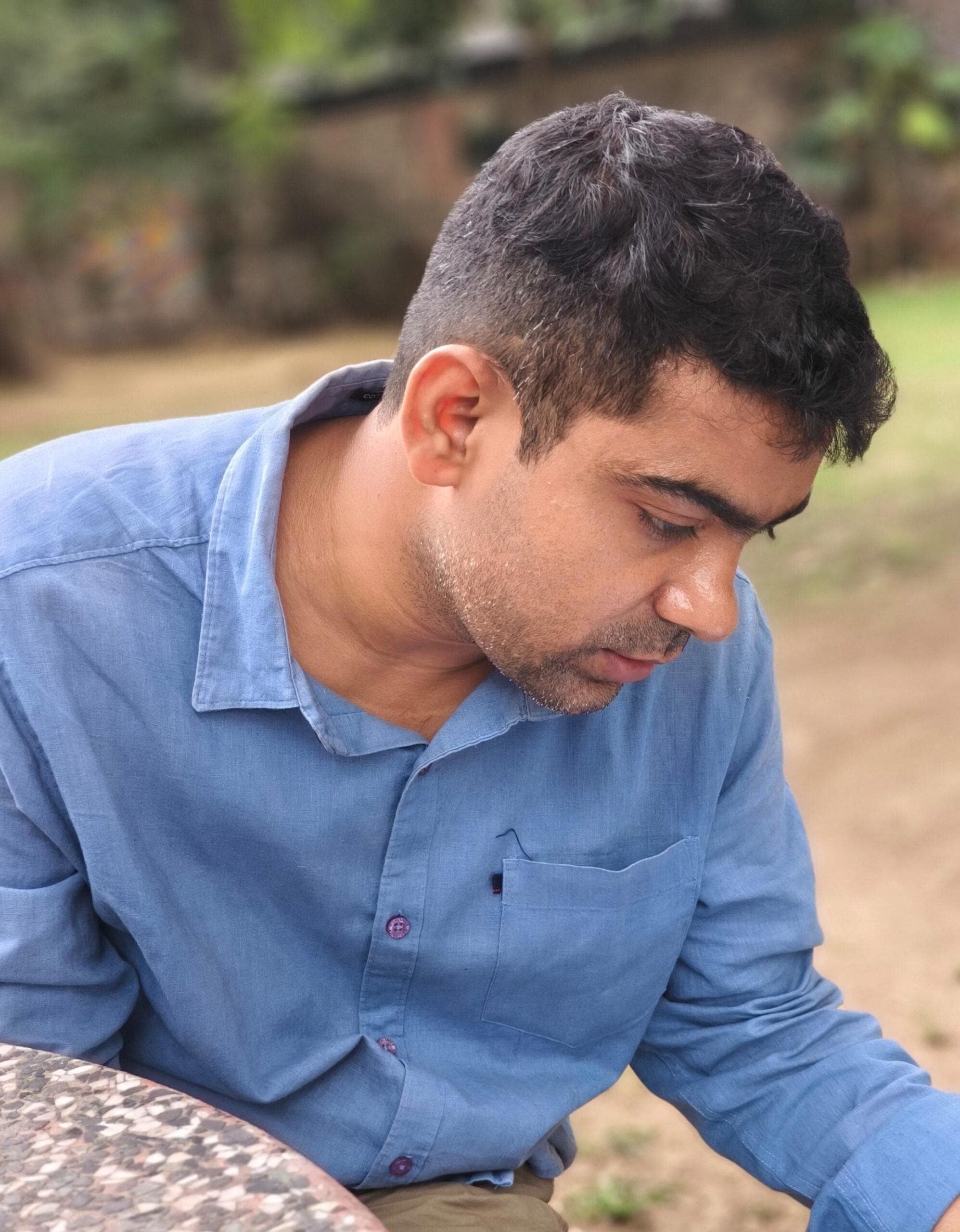
A Development Economist with postgraduate degrees in Economics and Public Administration from Jamia Millia Islamia, New Delhi. His work focuses on public finance, governance, and inclusive growth.